MAGAZINE | INSTITUTE | CURRENT ISSUE | ARTIST DIRECTORY | SHOP
KOLAJ LIVE ONLINE | WORLD COLLAGE DAY
COLLAGE ON VIEW
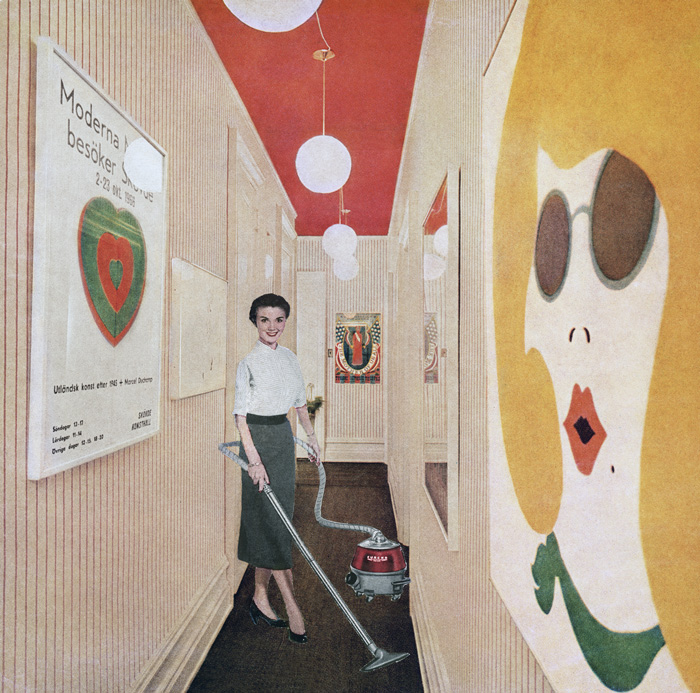
She-Bam Pop Pow Wizz!
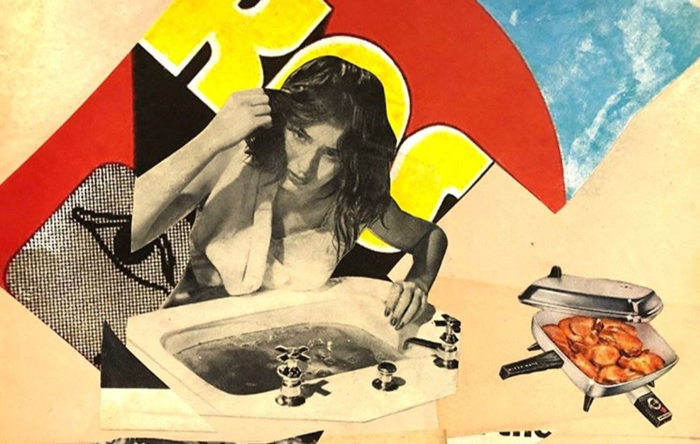
The Amazons of Pop at MAMAC in Nice, France through 28 March 2021. On the occasion of MAMAC’s 30th anniversary, “She-Bam Pow Pop Wizz! The Amazons of Pop” revisits an important aspect of MAMAC’s history: the face-off between France and the United States and appropriation between New Realism and Pop. On display, in a space covering over 12,900 square feet, is work by nearly forty artists from Europe and the United States, comprising 165 works (including collage, installation, painting, sculpture, film, assemblage, etc.) and archives. Seen here is Woman with Vacuum, or Vacuuming Pop Art by Martha Rosler. MORE
FROM THE ARTIST DIRECTORY
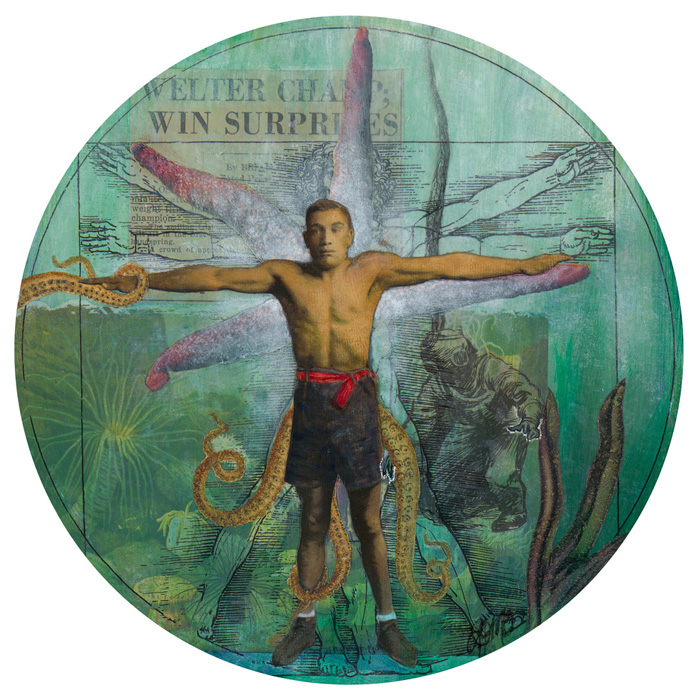
Shared Myths
Bothell, Washington, USA. Lisa Myers Bulmash explores issues of identity, trust, and imperfect memories. Obsessed with joining elements that seem to have no relationship to each other and driven to spotlight the contradictory narratives in American society that marginalize the most vulnerable, Myers Bulmash compels the viewer to adjust focus onto the individual realities hidden in our shared myths. MORE
COLLAGE COMMUNITIES
The Kut-uPs
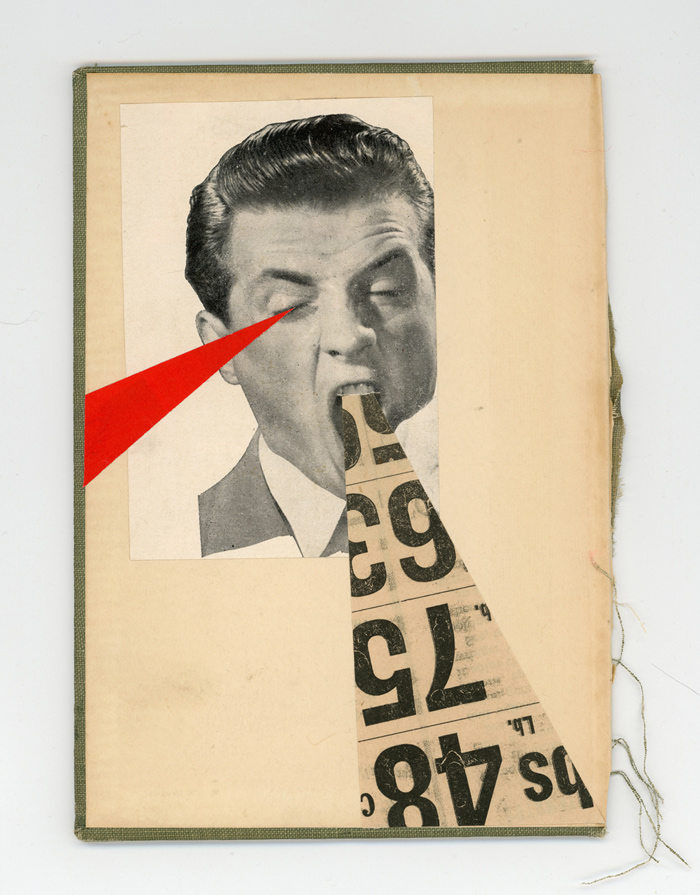
The Kut-uPs, established in 2014, is an international art movement founded by Johnny Brewton to promote, by means of collage technique, the disfiguration and beautification of the mundane. The manifesto reads as follows, “We shall resurrect from heaps of newspaper, discards, advertisements, punched tickets, the Sunday Times and give them a new life, a 2nd chance. The otherwise unwanted, abused and orphaned medium shall be taken in and given a warm place to sleep. We’re not satisfied with the existing form, image, media manipulation and propaganda. The materials must be scrambled and reassembled to render new ideas. Shift in perspective will give way to allow unfettered consciousness to emerge.” MORE
COLLAGE ON VIEW
Flotsam
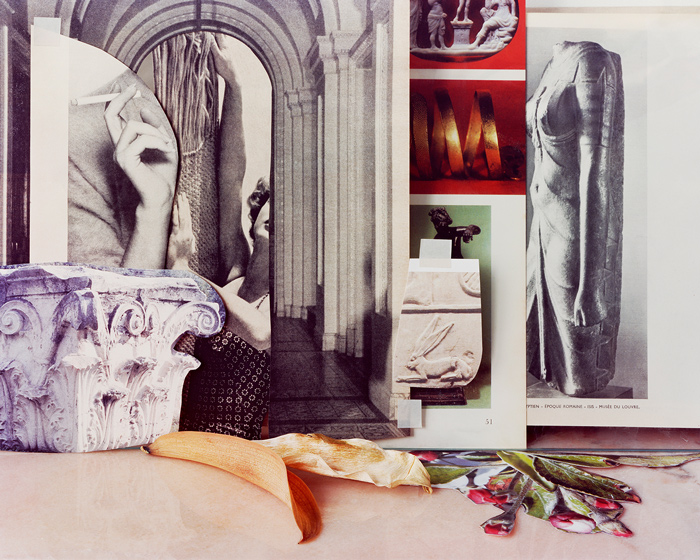
Celia Perrin Sidarous at Bradley Ertaskiran in Montreal, Quebec, Canada, 11 February-13 March 2021. Work by the Montreal artist has been shown widely around the world and is held in major Canadian museum collections. Danielle St-Amour writes, "There is something else here. Previously deemed derelict, maybe mistaken for something else, noise, fog, murk, mollusks. A dredging here of what’s always been there. Submerged things are gathering places for sea moss, seaweed, brightly colored comb clips, a wide hinge like a joint, a clam, a translucent ghost or a string of bubbles, pearls from a round orifice-come-live." MORE
FROM KOLAJ 31
Journey of a Soul
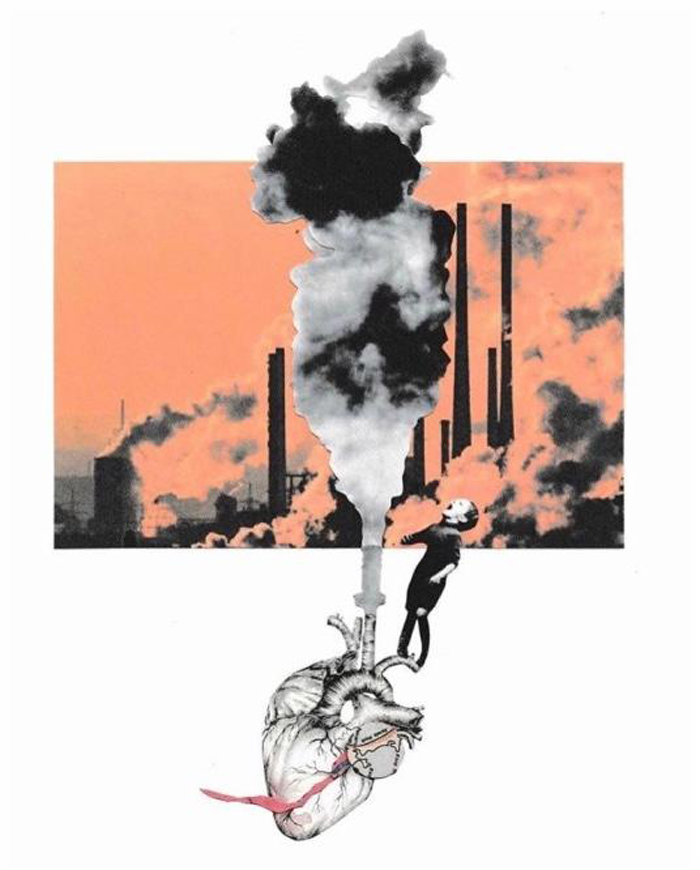
Journey of a Soul by Italian collagist Roberta Guarna has won two prestigious awards. The paper and fabric collage combines personal photography and acrylic paint and speaks to “the journey that each of us can travel in our own life amidst the infinite difficulties of being considered different from others." Guarna’s work, often autobiographical, is aimed at that marginalized, invisible and fragile part of society. MORE
WORKSHOP REPORT
Crystallized Feelings
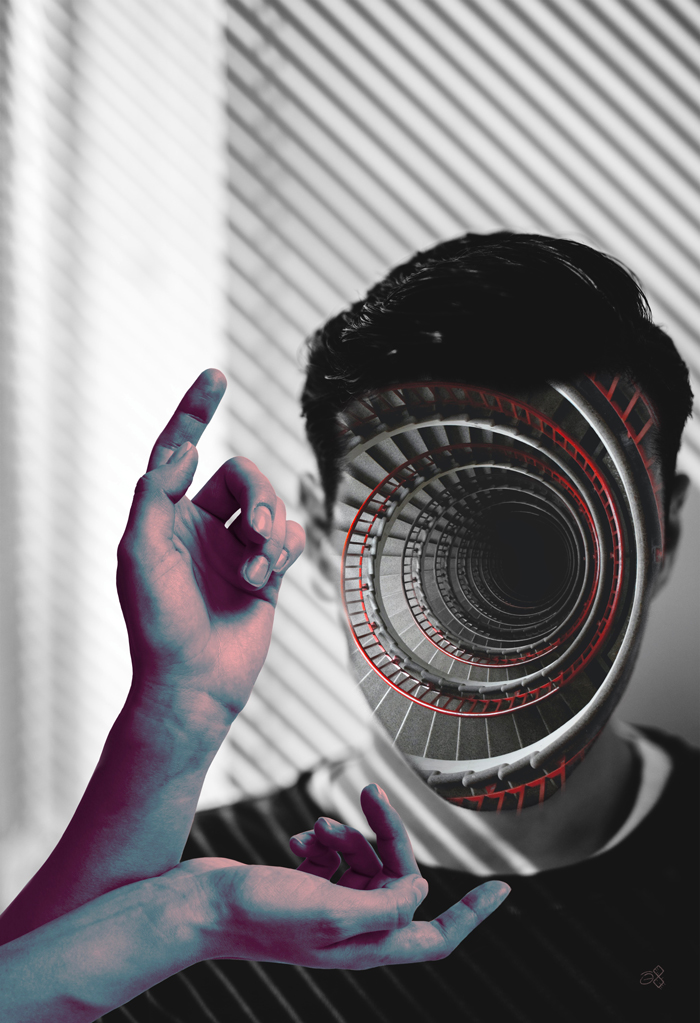
Curator Celia Crane writes, "By exposing his deepest vulnerabilities, Jonny Garcia finds a voice in the darkness, transforming his trials into a shared sense of intimacy. Through the medium of collage, strangers become witnesses; and witnesses become comrades. They feel simultaneously wounded and inspired by the beauty of the artist’s pain and join him in clinging to a certain hopeful skepticism for the future.” MORE
In the coming weeks, Kolaj Magazine will share Reports from the Curating Collage Workshop that took place in Fall 2020 with the University of Vermont's Fleming Museum. MORE
FROM KOLAJ 31
Passion in Action
Kolaj Institute is interested in how collage communities take shape. Suzanne Winkel founded the Arizona Collage Collective in September 2019 with the help of Lynette Guck, Dawn Hudson, and Martha Andreatos. We asked Winkel about how the group came together and their first year. Her story appears in Kolaj 31. Winkel writes, "I discovered the joy of cutouts. Scissors in hand, my need to make things took on a whole new purpose. As a result, I have amassed thousands of precisely cut images that have been carefully catalogued according to size, genre, and so on. My addiction was fueled. And then, when Kolaj Magazine created World Collage Day, the circle was complete." MORE

CALL TO ARTISTS :: Artist Lab: Art Meets History in New Mexico
Deadline: 28 February 2021 :: LEARN MORE

Recent Publications
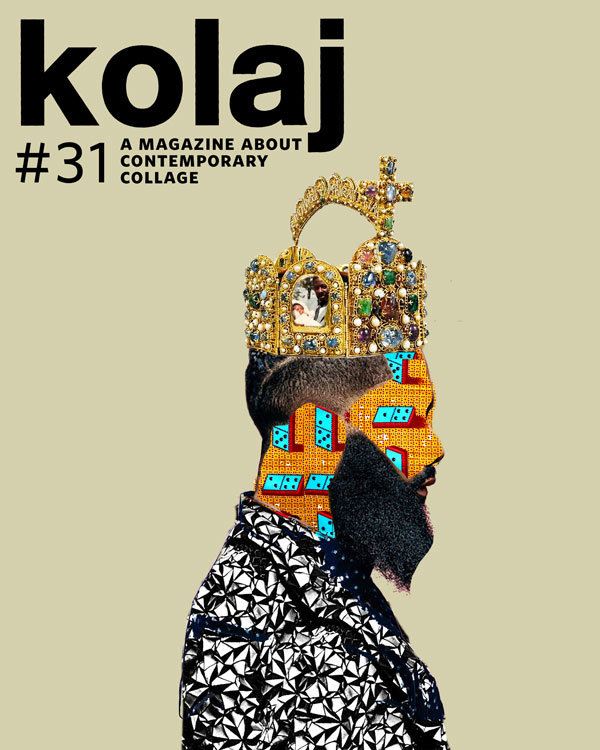
Our goal with every issue is that Kolaj Magazine is essential reading for anyone interested in the role of contemporary collage in art, culture, and society. We not only hope you enjoy the articles and images in Kolaj #31, we hope it leads you to asking great questions.
CURRENT ISSUE
Kolaj #31
If Kolaj #31 has an overarching theme, it would be about how artists are pulling from the past to speak to the now. We swim in a stream of ideas, some of which come at us so quick and hard that we rarely have a chance to consider where they come from…or where they are going. What ever happened to those stolen collages? Why do we think these things about some people but not others? Why can’t we name five scientists who are women? What is my place in the art world? How do I speak to my community? These are deep, critical questions that artists are trying to make sense of for themselves and for the people around them. It is exciting to tell their stories. Learning about them, what they did, how they work makes us better artists, writers, and, hopefully, better people. Collage is powerful magic. MORE
COLLAGE BOOK
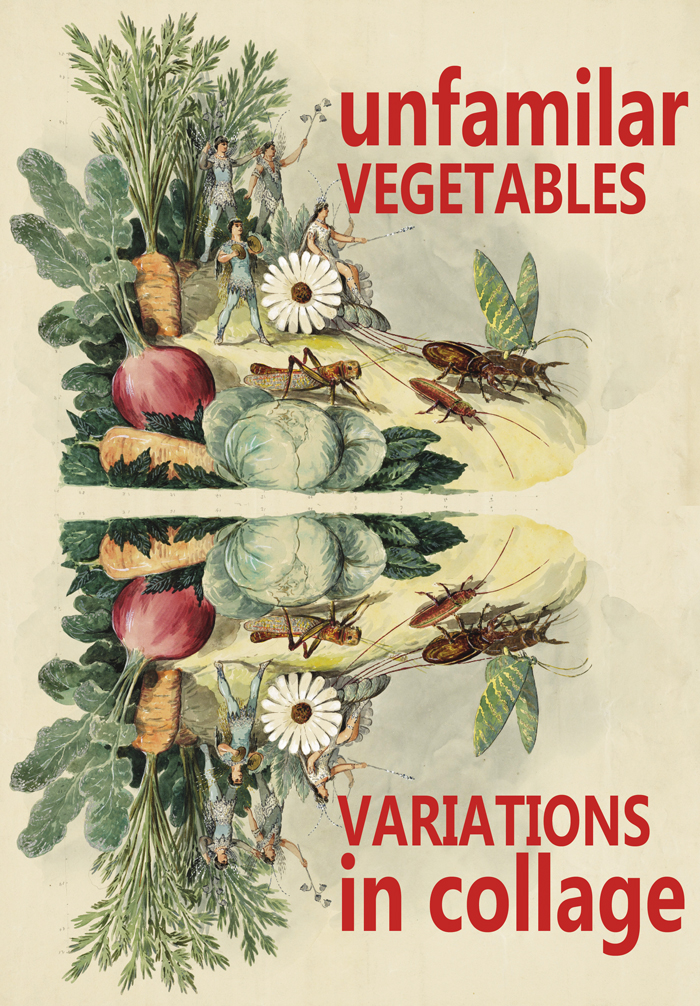
Unfamiliar Vegetables: Variations in Collage
Unfamiliar Vegetables is a collection of collage where each of the fifty artists interpreted, in their own way, Carlotta Bonnecaze’s 1892 Carnival float design Familiar Vegetables. Project organizer Christopher Kurts observed, “Unfamiliar Vegetables is an experiment in controlled chaos….tiny variations within each artist’s creative sphere accumulate until the outcomes are as unique as the people creating them.” MORE
COLLAGE COMMUNITIES
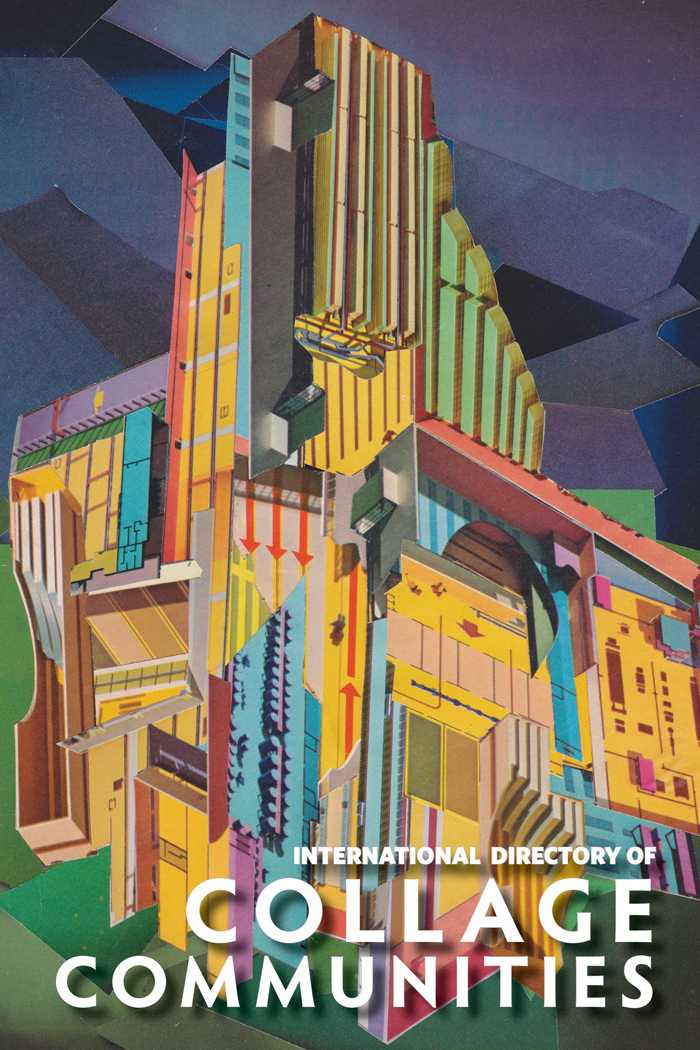
The International Directory of Collage Communities
The 104-page book is a survey of collage networks, guilds, communities, and projects as well as online efforts and groups focused on collage research. For each community, the directory presents their key activities, mission, how to join, and a bit of their history. Copious images illustrate the book. MORE
BOOK
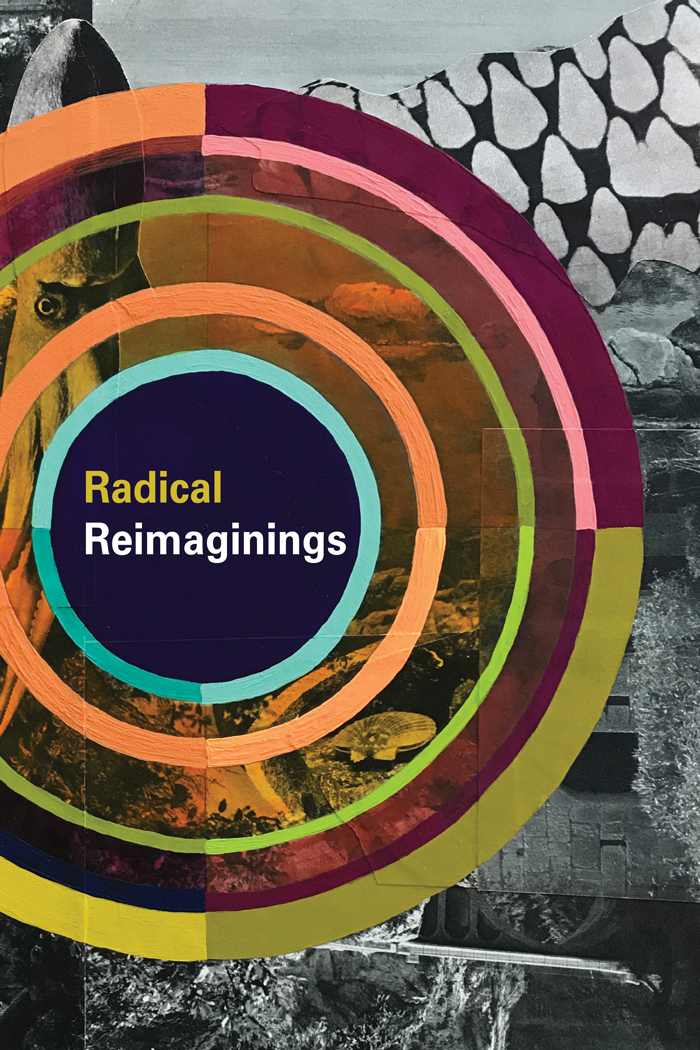
Radical Reimaginings
The curators of the 96-page book invited artists who use collage in their practice to put forward a work of art that offers a visual narrative that speaks to the unprecedented change unfolding in 2020. An essay by Ric Kasini Kadour reflects upon collage's unique ability to imagine new realities. Forty artists from nine countries and multiple Indigenous peoples—Salish-Kootenai/Métis-Cree/Sho-Ban, Tlingit/Nisga’a, Oglala/Lakota, and Seneca Nation—offer a variety of perspectives. The voices of Black, Latinx, Native, and white Americans mingle with those from Chile, Colombia, Mexico, Peru, Argentina, Canada, France, and Germany. Artwork is accompanied by a statement in which the artists describe how they want to reimagine the world. MORE
BOOK
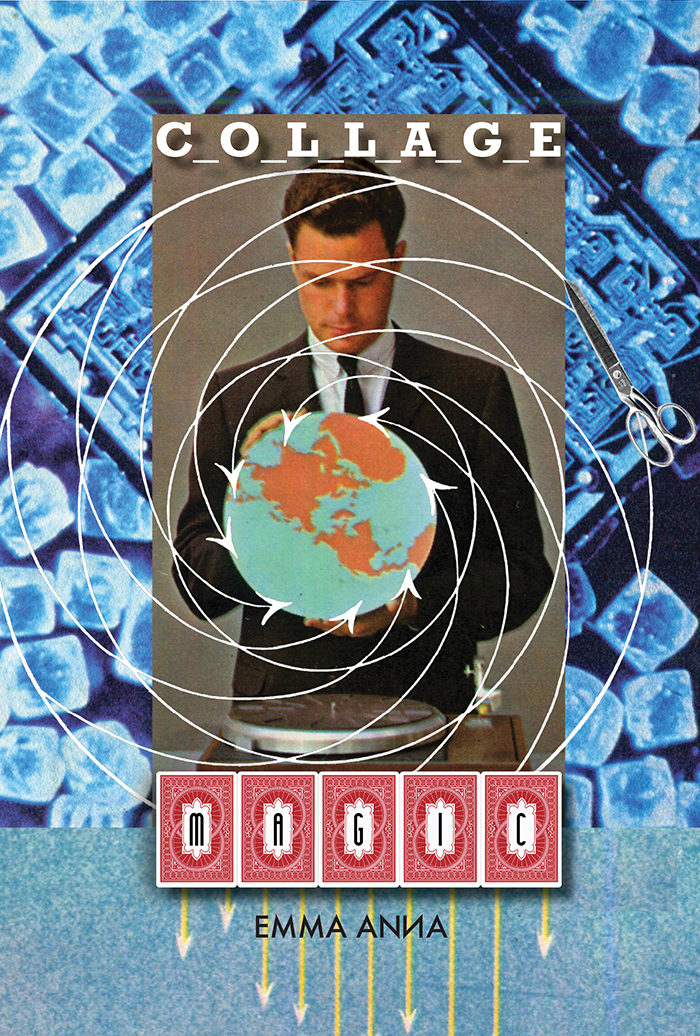
Collage Magic
by Emma Anna
Part autobiography, part fantasy, Emma Anna’s vision of The New Old World (aka The NOW) fuses vintage ephemera with modern imaging technologies. Emma shapes this strange world by using the pen tool from Adobe Photoshop as her magic wand, in the process declaring herself to be a “collage magician”. Part artist book, part document of art making, Collage Magic, from La Casa Verde Editions, is Emma Anna’s journey through magic and art. MORE
BOOK
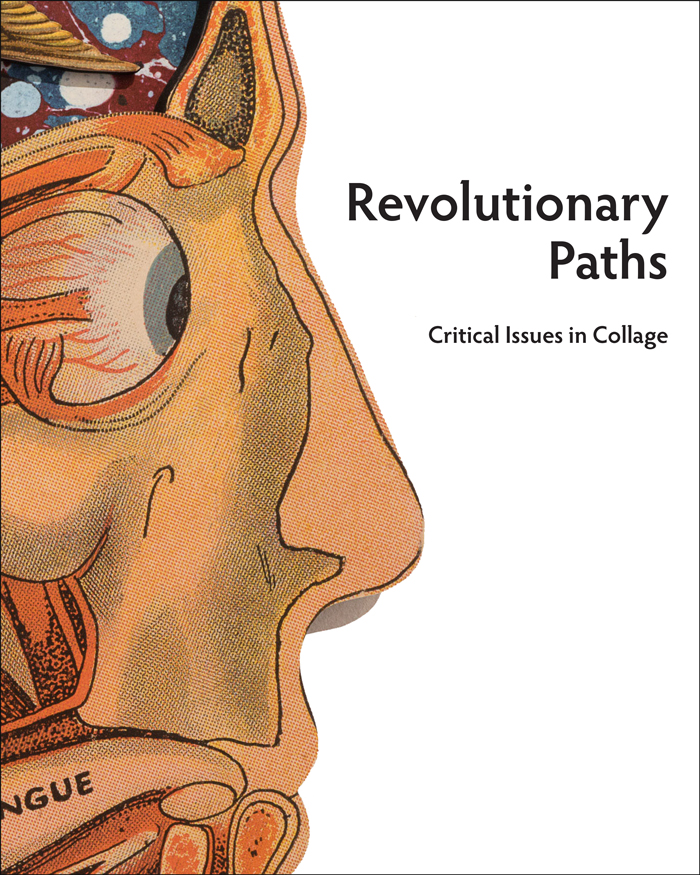
Revolutionary Paths
When the collage is presented in exhibition, it is often done so without the critical framework granted other mediums. In "Revolutionary Paths: Critical Issues in Collage", exhibition curator Ric Kasini Kadour presents examples of collage that represent various aspects and takes on the medium. Each work in the exhibition represents the potential for deeper inquiry and further curatorial exploration of the medium. MORE
BOOK
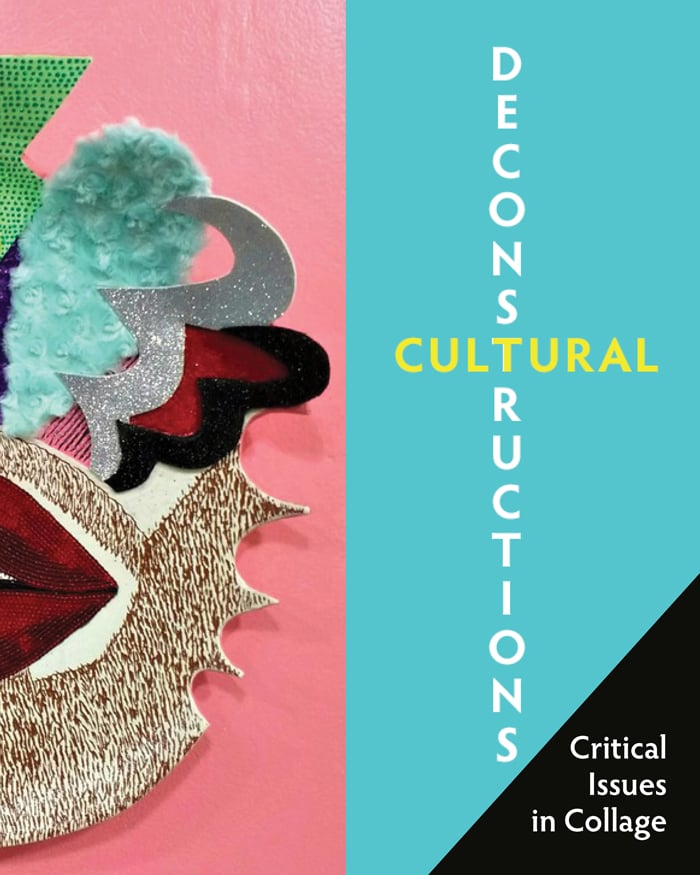
Cultural Decontructions
Collage is unique as a medium in that it uses as its material artifacts from the world itself. To harvest those fragments, the artist must first deconstruct culture; they must select, cut, and remove the elements they do not wish to use and then reconstruct work that tells a new story. In "Cultural Deconstructions: Critical Issues in Collage", exhibition curator Ric Kasini Kadour presents examples of collage artists who are deconstructing identity as a way to critique culture. MORE
Our goal with every issue is that Kolaj Magazine is essential reading for anyone interested in the role of contemporary collage in art, culture, and society. Each issue of Kolaj Magazine is dedicated to reviewing and surveying contemporary collage with an international perspective. We are interested in collage as a medium, a genre, a community, and a 21st century art movement.