MAGAZINE | INSTITUTE | CURRENT ISSUE | ARTIST DIRECTORY | SHOP
CALLS TO ARTISTS | WORLD COLLAGE DAY
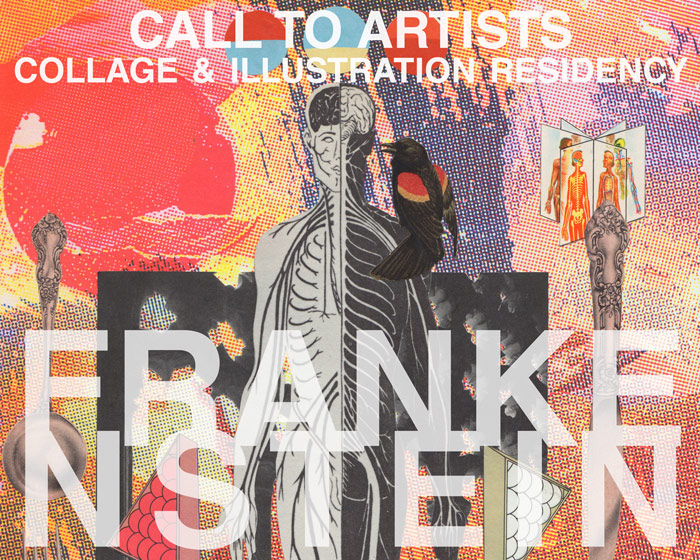
CALL TO ARTISTS
Frankenstein
A four-week, Collage & Illustration, virtual/online residency with Kolaj Institute in August 2023. During the residency, artists will work to visually interpret Mary Shelley’s 1818 proto-science fiction novel, Frankenstein; or, The Modern Prometheus. As part of Kolaj Institute’s ongoing Collage & Illustration project, this virtual residency aims to explore the themes of creation, identity, and the boundaries of human imagination through the captivating mediums of collage and illustration. Kolaj Institute will publish the book using the illustrations made during the residency as a way of bringing this important, historical book and the themes it raises to 21st century readers. A selection of artwork will be exhibited at Kolaj Institute in New Orleans. Deadline to apply: Sunday, June 25, 2023. MORE
FROM THE ARTIST DIRECTORY
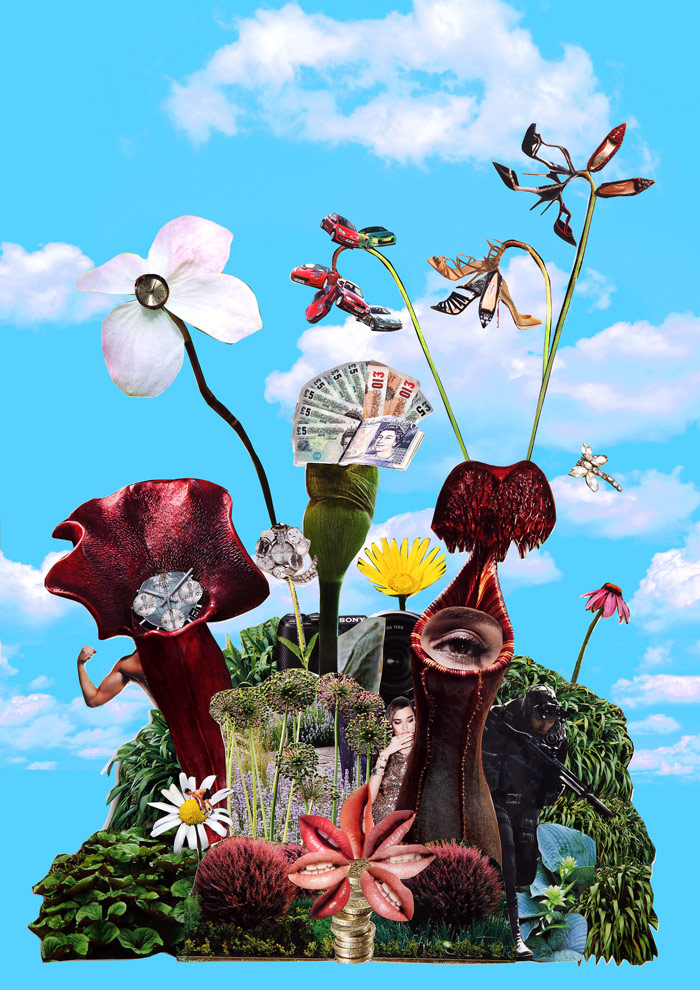
Human Intersubjectivity
London, England, United Kingdom. Underpinning all of Alexa Wright's work is an interest in people and what we think it is that makes us human. Using a range of media including collage, photography, video, sound, interactive installation, performance and book works, she often works with the personal stories of individuals whose life experiences place them at the margins of society. Frequently situated at the intersection of art and medical science, her projects explore human inter-subjectivity through qualities like vulnerability and empathy. A lot of her work is developed in collaboration with people with physical disabilities or mental health issues, and/or with medical scientists and other creative practitioners. MORE
COLLAGE ON VIEW
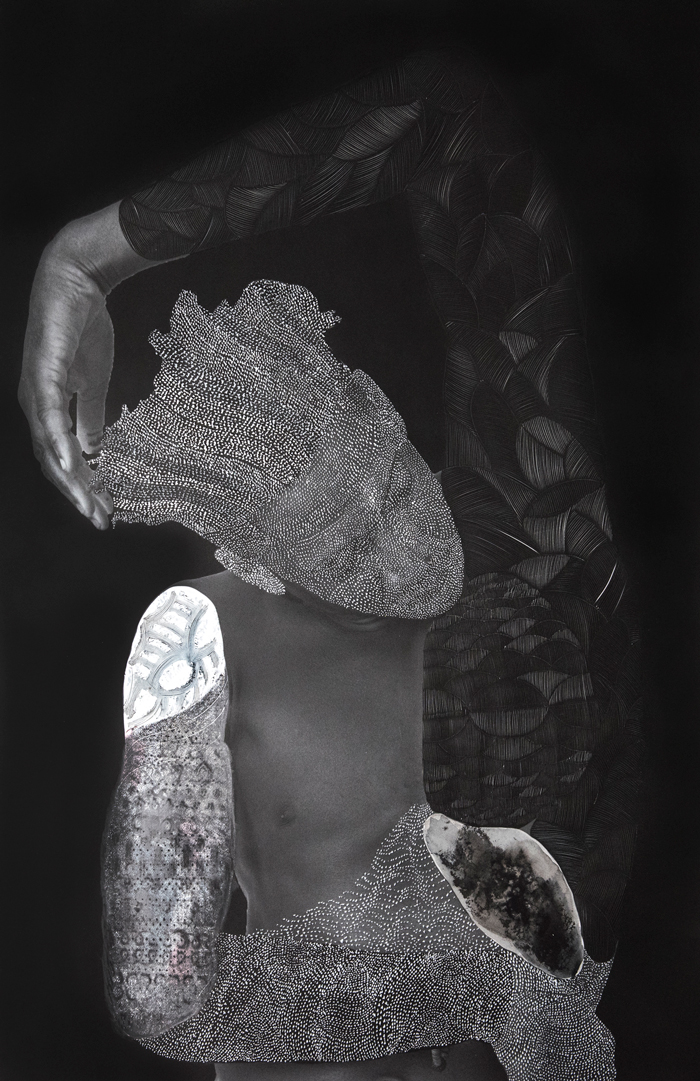
Day Jobs
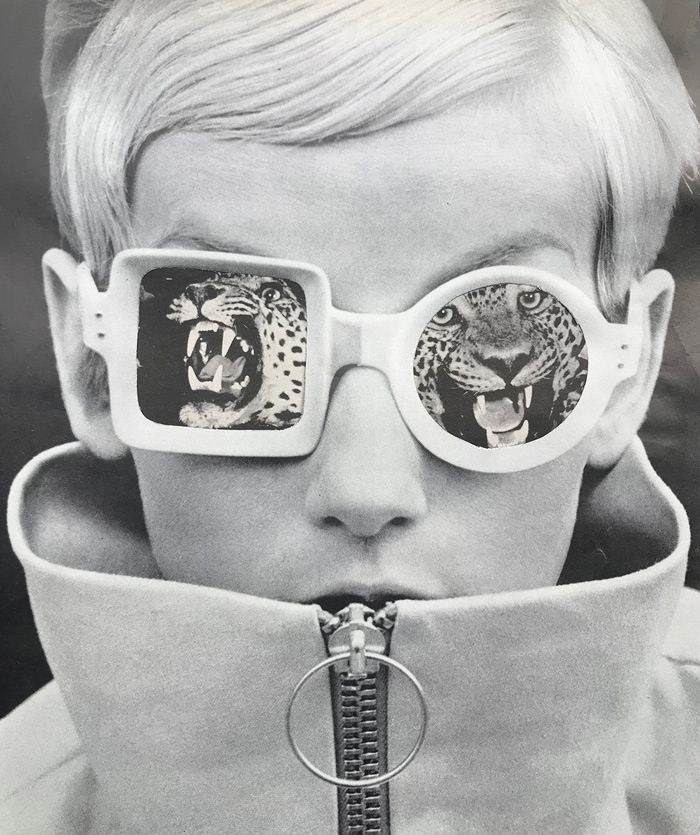
at the Blanton Museum of Art in Austin, Texas, USA through 23 July 2023. “Day Jobs”, the first major exhibition to examine the overlooked impact of day jobs on the visual arts, is dedicated to demystifying artistic production and upending the stubborn myth of the artist sequestered in their studio, waiting for inspiration to strike. The exhibition will make clear that much of what has determined the course of modern and contemporary art history are unexpected moments spurred by pragmatic choices rather than dramatic epiphanies. Conceived as a corrective to the field of art history, the exhibition also encourages us to more openly acknowledge the precarious and generative ways that economic and creative pursuits are intertwined. MORE
COLLAGE COMMUNITIES
Wilder Collage
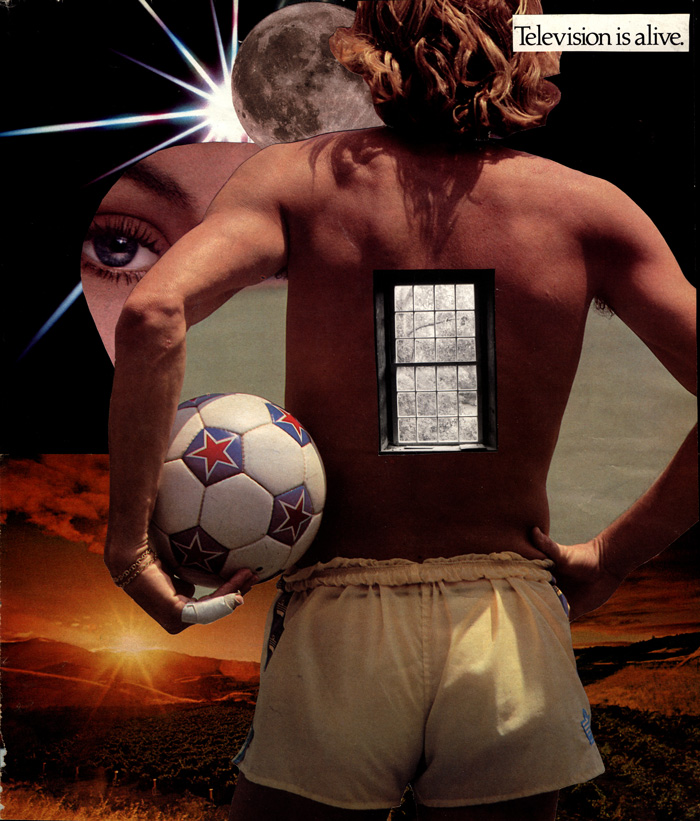
The group hosts two virtual Zoom calls each month. One is hosted by a leader in the collage community and one is a studio call where each member gets to share a bit about what they have going on in their art practice. There are also Instagram Live interviews, a directory of artists, and blog interviews. The group has had calls with hosts such as Kike Congrains, Nancey B. Price, Twiggy Boyer, Miss Printed, Heather Polk and more. If an artist or creative wants to get involved, they can sign up through their Patreon page. MORE
FROM THE ARTIST DIRECTORY
Restore a Sense of Wonder
Astoria, New York, USA. Collage, Michael Joshua Rowin believes, is the art of fashioning mysterious, absurd, strange, and ineffable scenes out of the quotidian and disregarded products of an enervating culture. To make collage art is to restore to the soul a sense of wonder out of commercial and industrial images that too often divert us from our innate creativity. MORE

COLLAGE BOOKS
Chocolates from Tangier
A Holocaust replacement child’s memoir of art and transformation. by Jana Zimmer. A second-generation Holocaust survivor weaves together fragments of her family’s history and witness testimony in narrative and collage, using her art as transformation and remembrance. "Zimmer’s task has been the seemingly impossible — to remember where she had never been, for her parents, who had wanted only to forget, and to find her place between them." MORE
COLLAGE ON VIEW
Unseen Neighbors: Community, History & Collage
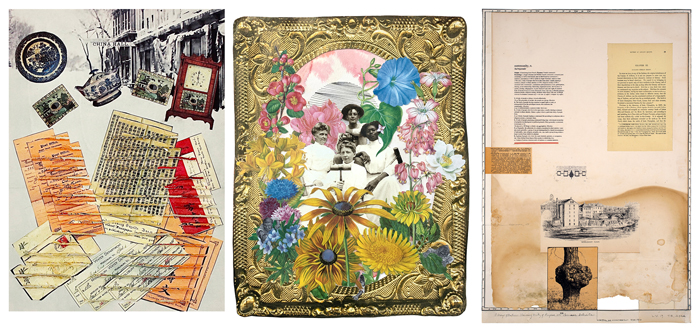
Artists in the Archives at the Henry Sheldon Museum of Vermont History in Middlebury, Vermont, USA through August 2023. Under the curatorial direction of Kolaj Institute Director Ric Kasini Kadour and with the support of Stewart-Swift Research Center Archivist Eva Garcelon-Hart and Henry Sheldon Museum Collections Associate Taylor Rossini, the Henry Sheldon Museum of Vermont History in Middlebury, Vermont, engaged with twenty-three artists from seven countries to make twenty-four collage prints referencing history material in the museum's Stewart-Swift Research Center archives. The prints are on exhibition and the subject of a book, Artists in the Archives, published by Kolaj Institute.
In its second showing, Unseen Neighbors: Community, History & Collage puts additional focus on previously absent populations from our archival records. In addition to the complete folio of collage prints, three collages--Todd Bartel’s A Group of Nations Claiming Unity of Purpose or Common Interests, Jeanna Penn’s A Fly in the Buttermilk, and Young Shin’s Untitled (China Hall)--will be shown in their original analog format and enhanced with displays of recently discovered and acquired materials highlighting the presence of Native American, African American, and Asian peoples in the Middlebury area. MORE
PRINT MAGAZINE
Kolaj Magazine relies on our subscribers. Your support of this magazine keeps us going and makes it possible for us to investigate and document collage and to promote a deeper, more complex understanding of the medium and its role in art history and contemporary art.
CURRENT ISSUE
Kolaj #37
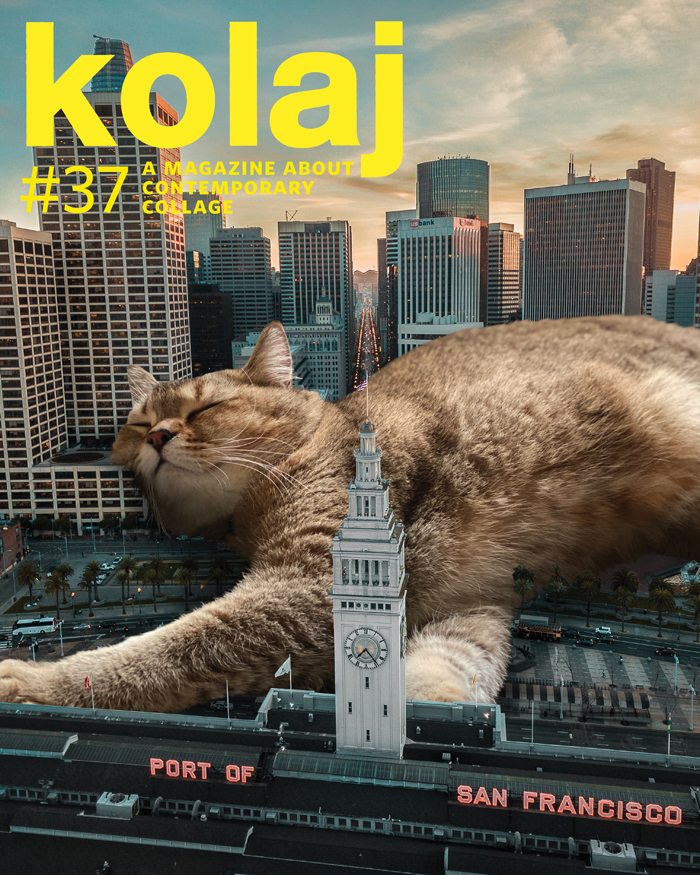
Cats. Cats in space. Cats lounging around buildings. San Fran Cat Nap by Matt McCarthy is on the cover of Kolaj 37. This digital collagist from Chapel Hill, North Carolina, USA “transports viewers to a world that’s similar to our own, but also features massive felines stalking our landscapes” and has a lot of fun doing so.
Kolaj Magazine exists to show how the world of collage is rich, layered, and thick with complexity. By remixing history and culture, collage artists forge new thinking. To understand collage is to reshape one's thinking of art history and redefine the canon of visual culture that informs the present. MORE
RECENT PUBLICATIONS
COLLAGE BOOK
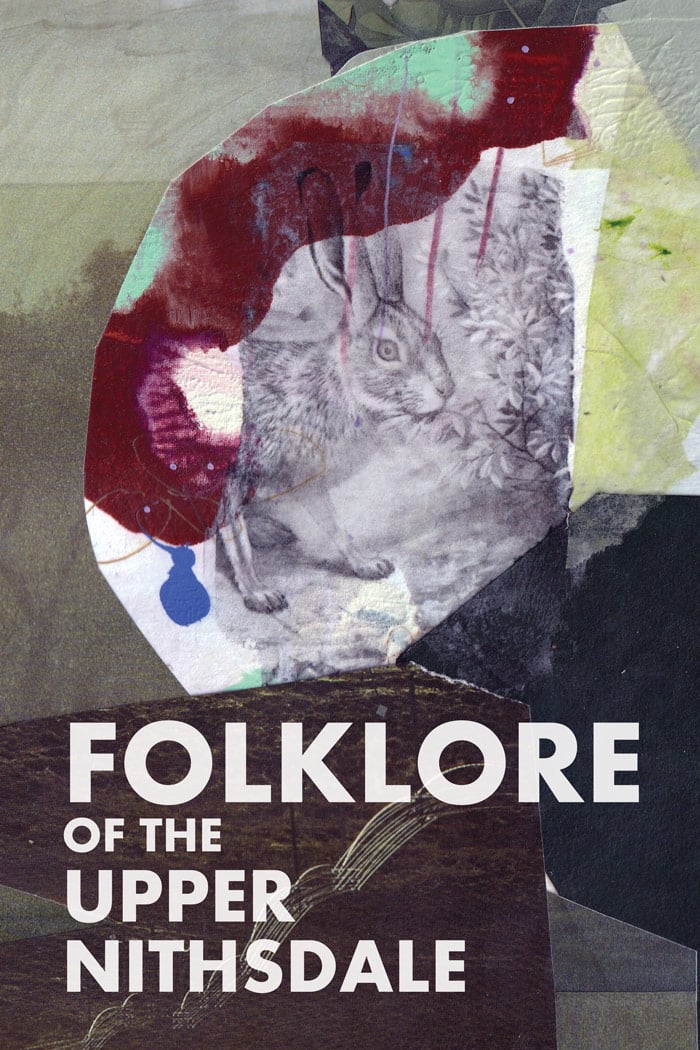
Folklore of the Upper Nithsdale
Stories of Witches, Ghosts, & Other Spirits from Sanquhar, Scotland
Thirty-three collage artists illustrate stories of witches, ghosts, and other spirits from Sanquhar, Scotland. Using stories collected from William Wilson’s 1904 book, artists reimagine these tales in a 21st Century context and invite us to see folklore as the imagination of the past, understood in the present. The book includes an introduction by Ric Kasini Kadour. MORE
POETRY JOURNAL
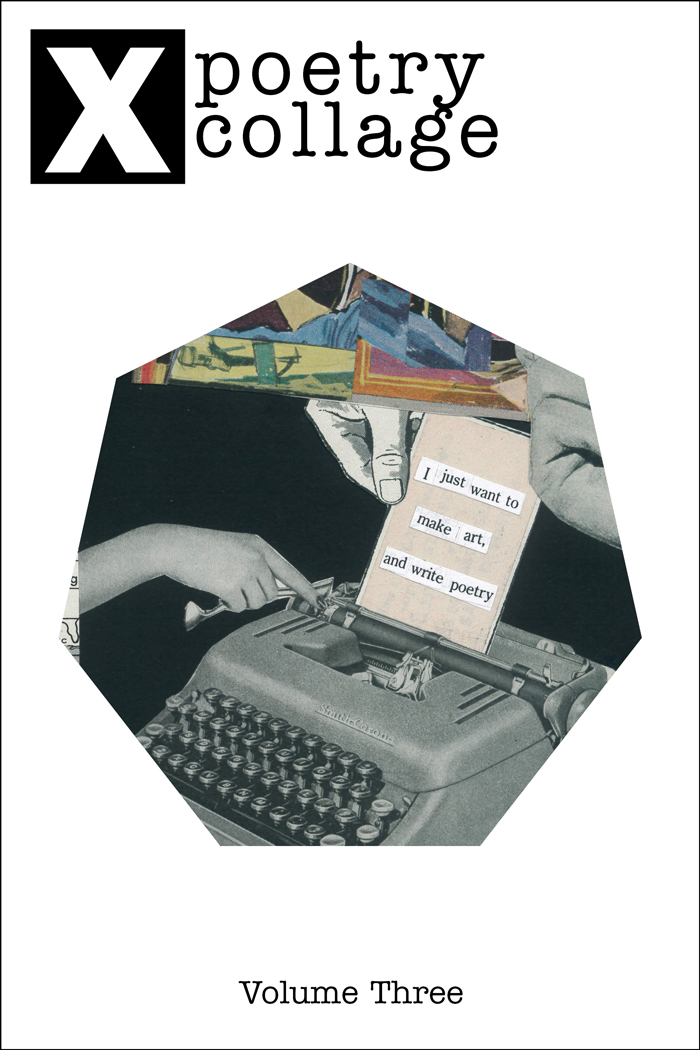
PoetryXCollage
Volume Three
PoetryXCollage is a printed journal of artwork and writing which operates at the intersection of poetry and collage. Each issue presents six movements of work by artists and curators. Page spreads are meant to be free zones of thinking where the contributor has chosen all elements of the layout: font, image place, composition, etc. In Volume Three: Adam Farcus (Urbana, Illinois, USA) | Carolina Martins (Lisbon, Portugal) | Émilie Karuna (Montreal, Quebec, Canada) | Jenn Arras (Brooklyn, New York, USA) | Julie Byers (Coffs Harbour, New South Wales, Australia) | Kerrie More (Kalispell, Montana, USA).
POETRY JOURNAL
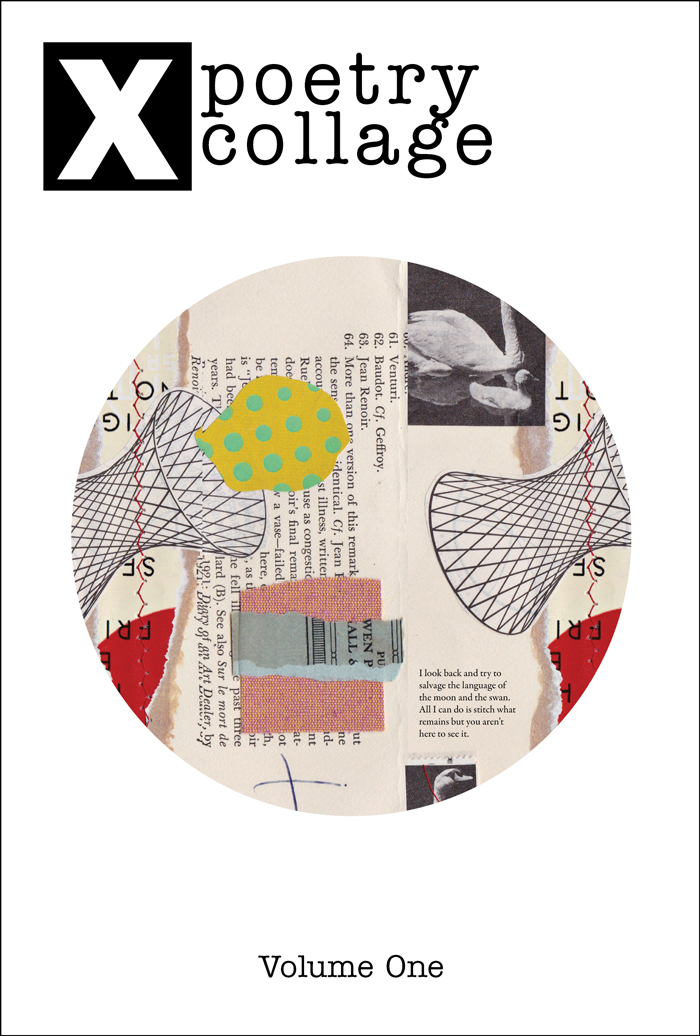
PoetryXCollage
Volume One
PoetryXCollage is a printed journal of artwork and writing which operates at the intersection of poetry and collage. We are interested in found poetry, blackout poetry, collage poems, haikus, centos, response collages, response poems, word scrambles, concrete poetry, scatter collage poems, and other poems and artwork that inhabit this world. In this issue: Rosemary Rae, El Cajon, California, USA | Cathy Greenhalgh, London, United Kingdom | Jennifer Roche, Chicago, Illinois, USA | doriana diaz, Philadelphia, Pennsylvania, USA | Thomas Mayer, Berlin, Germany l Cheryl Chudyk, Kirkland, Washington, USA
POETRY JOURNAL
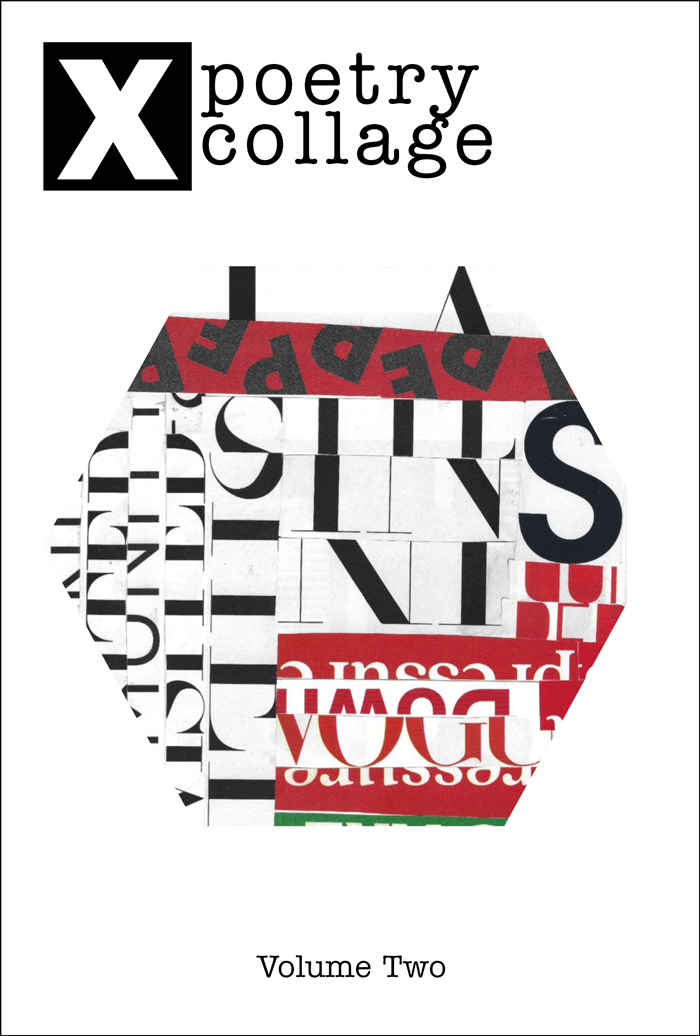
PoetryXCollage
Volume Two
Each issue of PoetryXCollage presents six movements of work by artists and curators. Page spreads are meant to be free zones of thinking where the contributor has chosen all elements of the layout: font, image place, composition, etc. In this issue: Anthony D. Kelly, Castle Bar, County Mayo, Ireland l Carla Reyes, Astoria, New York, USA l Janice McDonald, Denver, Colorado, USA l Samantha Brown, Blackrock, County Louth, Ireland l Laura Tafe, Lebanon, New Hampshire, USA l Collaborations by Cathy Greenhalgh, Thomas Mayer, Rosemary Rae, Anthony D. Kelly, & Cheryl Chudyk

NEW BOOK
Wallflowers: Collage as Street Art
Wallflowers: Collage as Street Art explores the intersection of collage and street art. Christopher Kurts recalls the formation of the Kolaj Street Krewe from its creation at Kolaj Fest New Orleans to a guerilla art project during the COVID-19 pandemic to an artist residency for Street Artists. The book contains examples of collage as street art by twenty-four artists from eight countries. MORE
BOOK
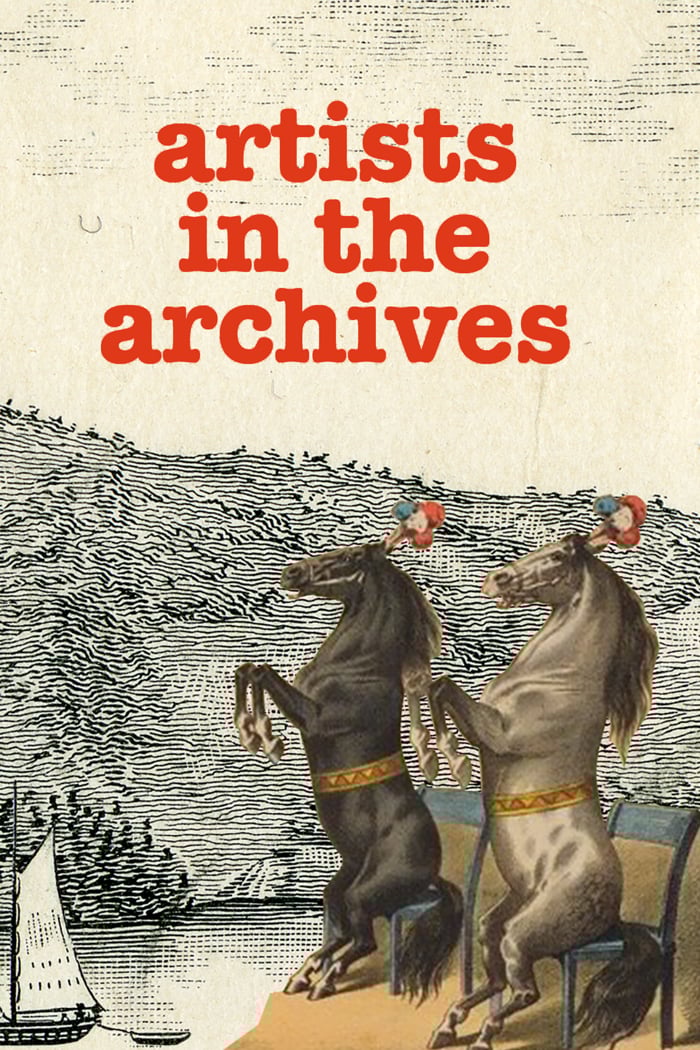
Artists in the Archives
Local history museums, archives, and collections are vital to building healthy communities and to anchoring our understanding of the world around us in the place where we live, work, and play. Collage artists have unique skills that are particularly useful in our historical moment. Artists in the Archives contains artworks and commentary as well as an extensive essay by Ric Kasini Kadour about the project that brought twenty-three artists from seven countries to make twenty-four collage prints referencing history material in the archives of the Henry Sheldon Museum. The essay reflects on the role artists can play in the interpretation and presentation of historic material in light of this history. MORE
BOOK
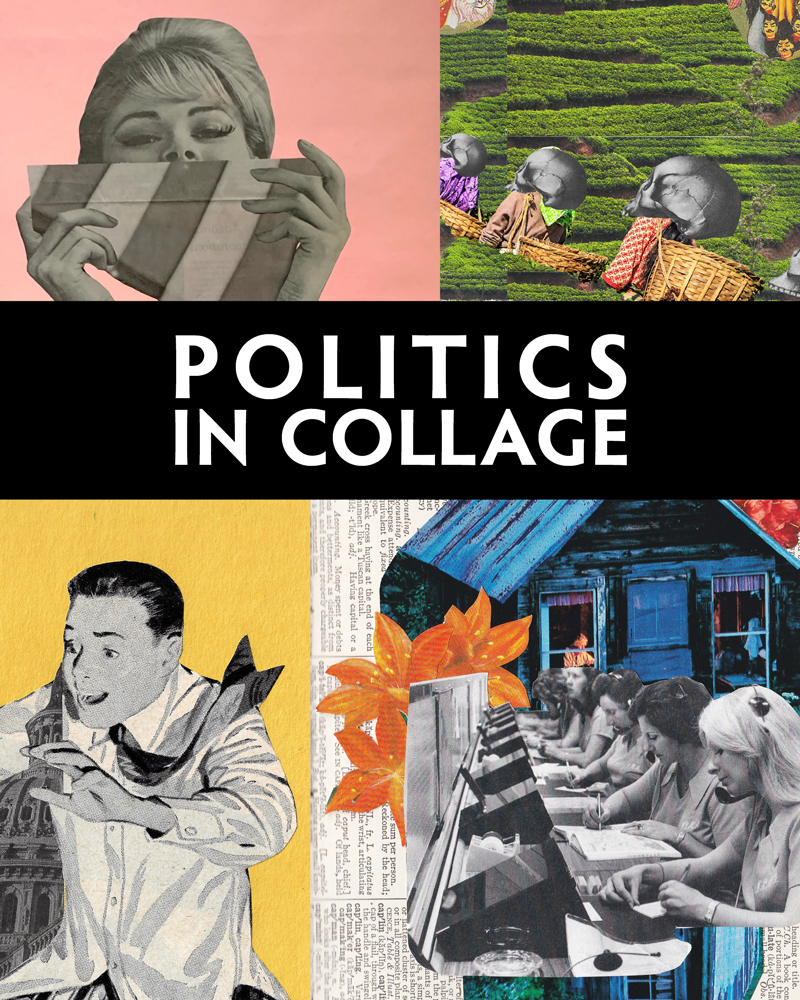
Politics in Collage
In a time where the challenges facing us as individuals and communities have grown to seemingly insurmountable levels, further exacerbated by the increasing toxicity of the political climate, artists are using their work to confront these challenges by engaging their viewers in a higher level of discourse. Through a virtual residency, twenty-five artists created collage works examining complex socio-political issues that contemporary society is contending with, in order to spark meaningful dialogue and inspire deeper engagement. MORE
BOOK
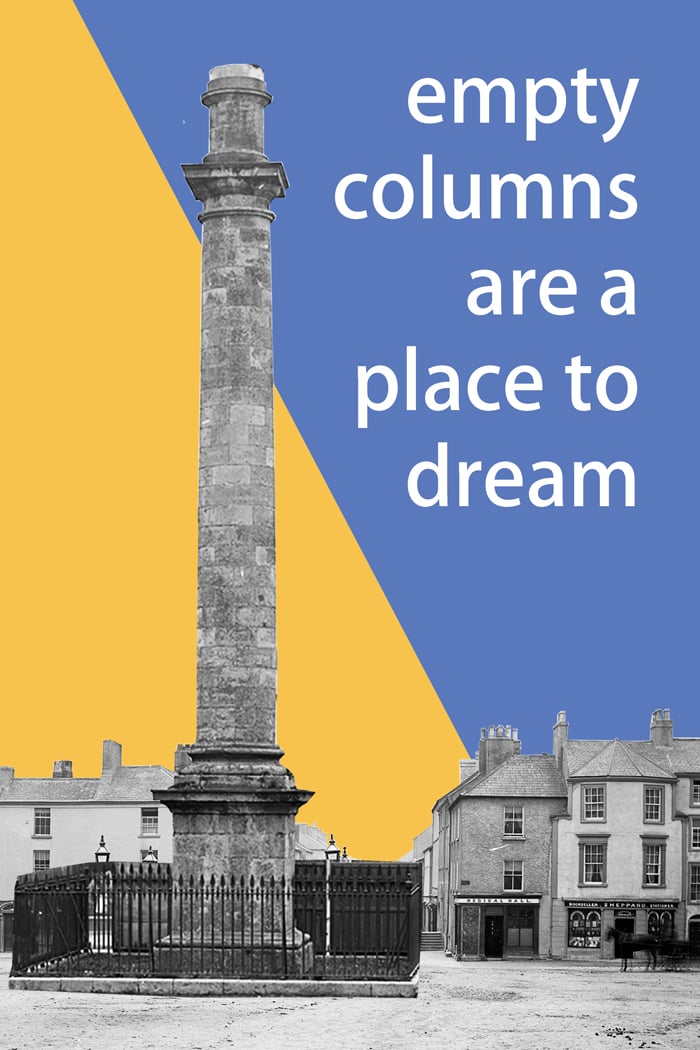
Empty Columns Are a Place to Dream
A companion book to the project of the same name, Ric Kasini Kadour unpacks what monuments are and their role in our communities. The book shows what happens when collage artists reimagine monuments as sites of truth and reconciliation. The book features the collages of eighteen international artists made a series of collages that reimagined the empty column in the center of Birr, County Offaly, Ireland. MORE
BOOK
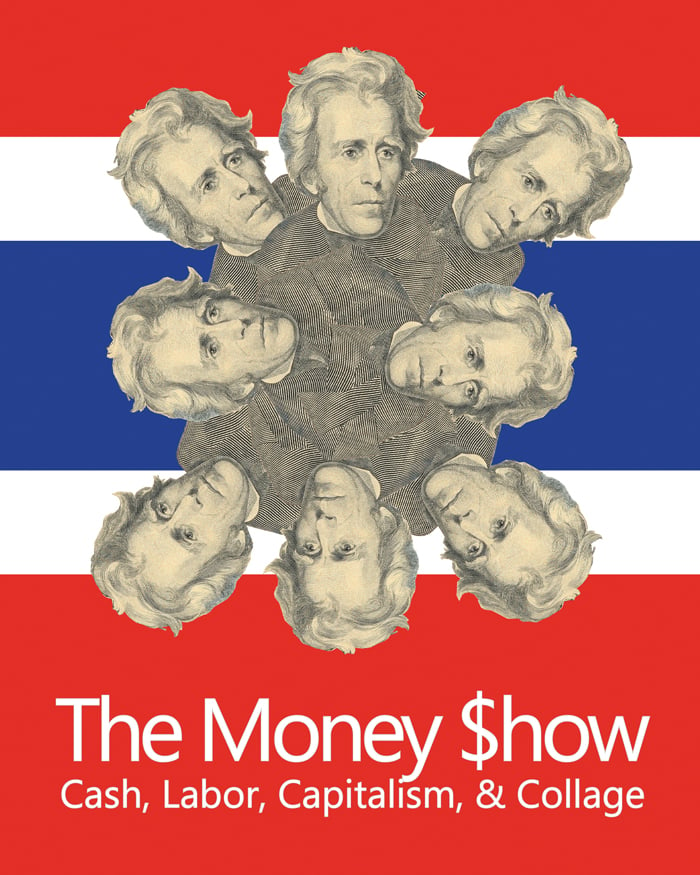
The Money $how: Cash, Labor, Capitalism & Collage
The Money $how juxtaposes contemporary artwork against fragments of history and literature as a way of showing how collage can help us deconstruct culture and understand the world differently. Artists collage dollar bills into flowers and mine material remnants to tell stories about home economics. MORE
BOOK
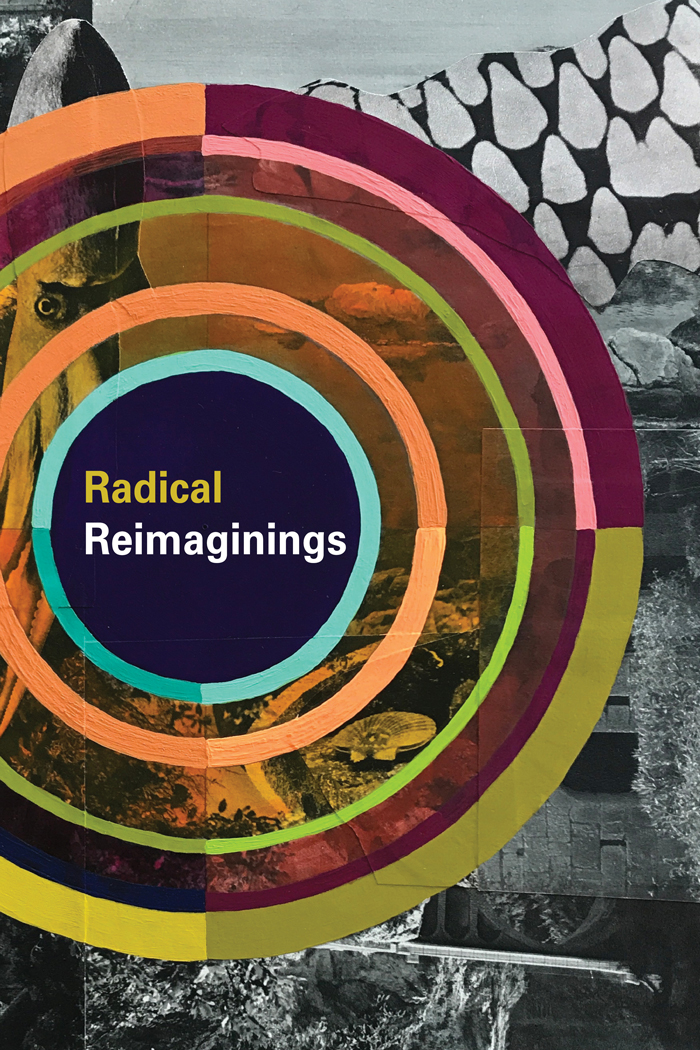
Radical Reimaginings
The curators of the 96-page book invited artists who use collage in their practice to put forward a work of art that offers a visual narrative that speaks to the unprecedented change unfolding in 2020. An essay by Ric Kasini Kadour reflects upon collage's unique ability to imagine new realities. Forty artists from nine countries and multiple Indigenous peoples—Salish-Kootenai/Métis-Cree/Sho-Ban, Tlingit/Nisga’a, Oglala/Lakota, and Seneca Nation—offer a variety of perspectives. The voices of Black, Latinx, Native, and white Americans mingle with those from Chile, Colombia, Mexico, Peru, Argentina, Canada, France, and Germany. Artwork is accompanied by a statement in which the artists describe how they want to reimagine the world. MORE
BOOK
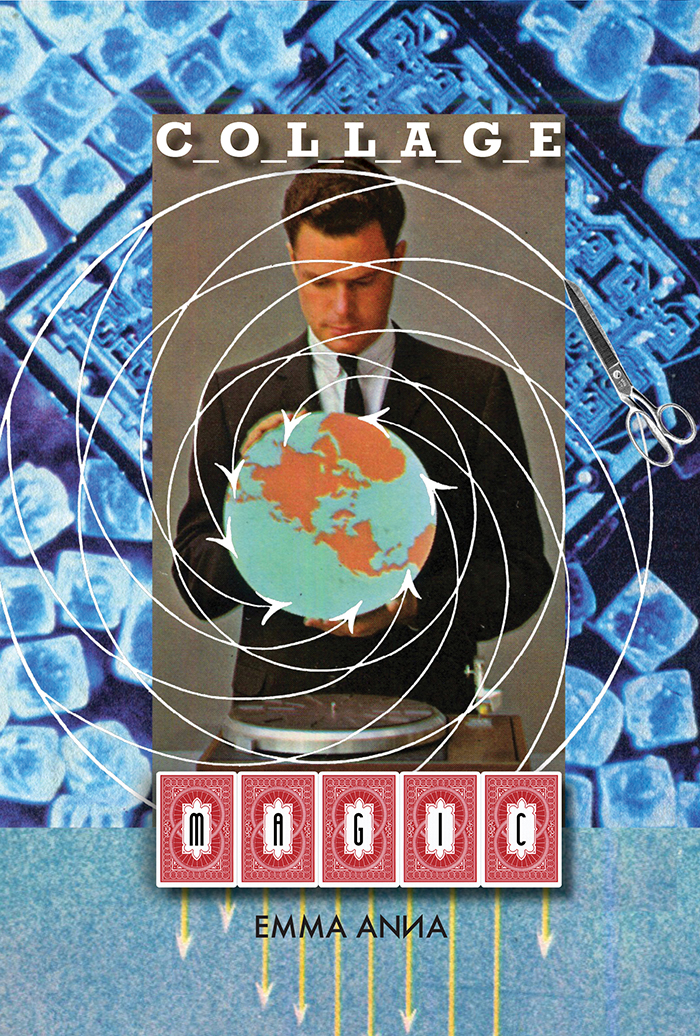
Collage Magic
by Emma Anna
Part autobiography, part fantasy, Emma Anna’s vision of The New Old World (aka The NOW) fuses vintage ephemera with modern imaging technologies. Emma shapes this strange world by using the pen tool from Adobe Photoshop as her magic wand, in the process declaring herself to be a “collage magician”. Part artist book, part document of art making, Collage Magic, from La Casa Verde Editions, is Emma Anna’s journey through magic and art. MORE
BOOK
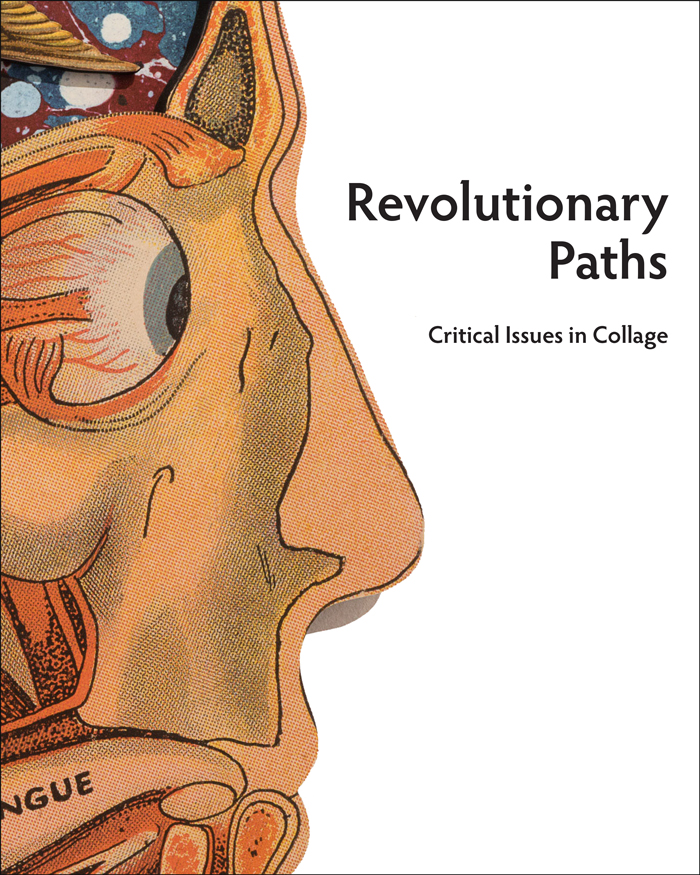
Revolutionary Paths
When the collage is presented in exhibition, it is often done so without the critical framework granted other mediums. In "Revolutionary Paths: Critical Issues in Collage", exhibition curator Ric Kasini Kadour presents examples of collage that represent various aspects and takes on the medium. Each work in the exhibition represents the potential for deeper inquiry and further curatorial exploration of the medium. MORE
BOOK
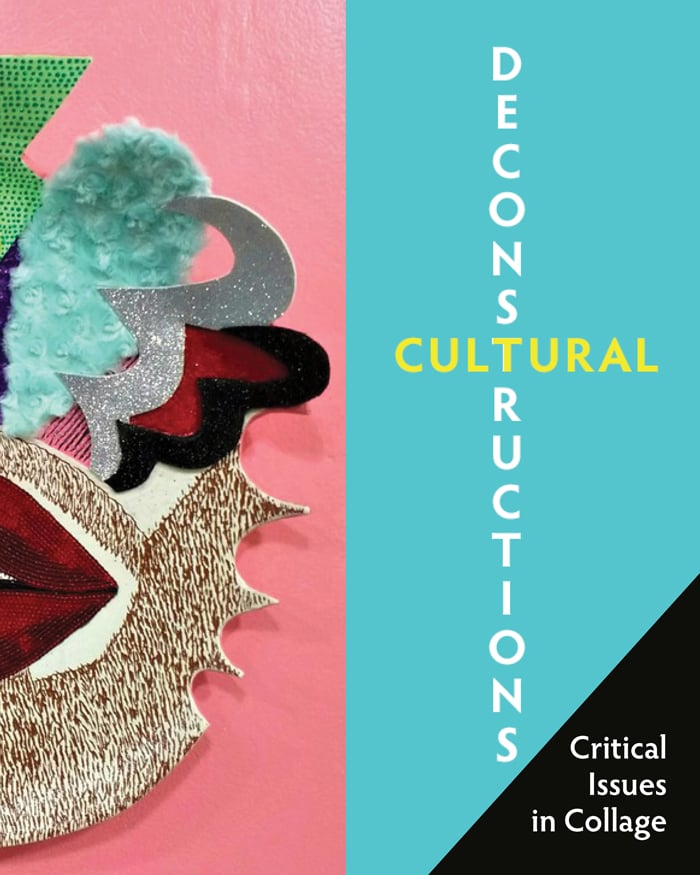
Cultural Deconstructions
Collage is unique as a medium in that it uses as its material artifacts from the world itself. To harvest those fragments, the artist must first deconstruct culture; they must select, cut, and remove the elements they do not wish to use and then reconstruct work that tells a new story. In "Cultural Deconstructions: Critical Issues in Collage", exhibition curator Ric Kasini Kadour presents examples of collage artists who are deconstructing identity as a way to critique culture. MORE
COLLAGE BOOK
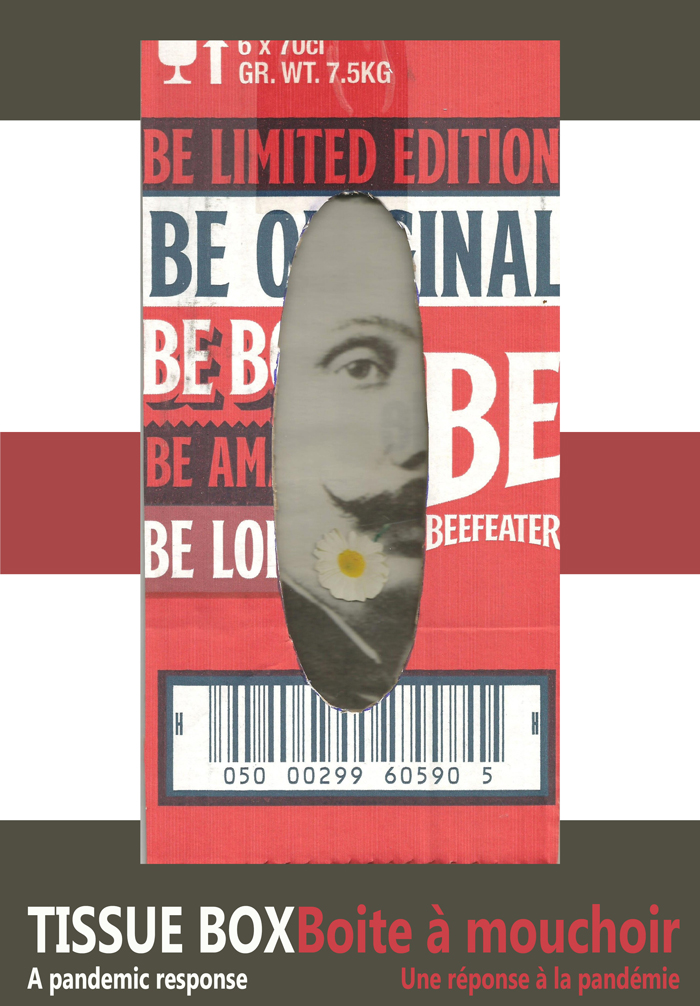
Tissue Box:
A Pandemic Response
Boite à mouchoir: Une réponse à la pandémie. In Spring 2020, as the world was going into lockdown due to the COVID-19 pandemic, Quebec Collagiste Virginie Maltais felt a deep need for a point of reference. Her solution was a project that asked collage artists from around the world to make a collage using the top of a tissue box. "Small projects are important. You regain your courage and hope when you start and manage to finish something. There is no small project. We do big projects with lots of little steps. Step by step, we move forward. Together. And it is all of these small steps, together, that led to the creation of this book." Maltais worked with Kolaj Institute and Kasini House to produce a bilingual book about the project. MORE
COLLAGE BOOK
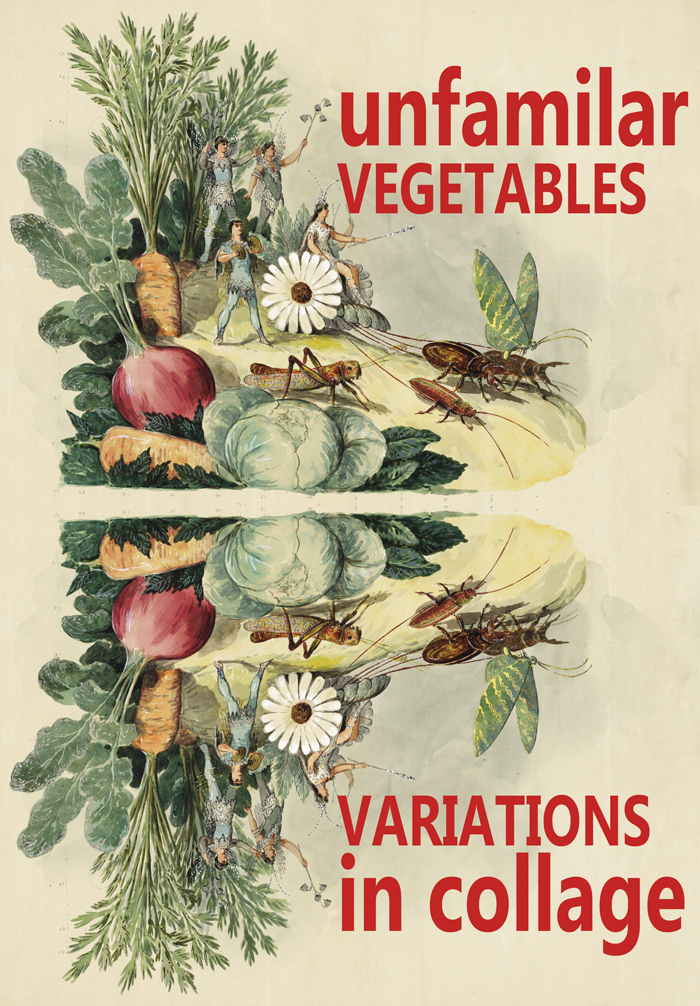
Unfamiliar Vegetables: Variations in Collage
Unfamiliar Vegetables is a collection of collage where each of the fifty artists interpreted, in their own way, Carlotta Bonnecaze’s 1892 Carnival float design Familiar Vegetables. Project organizer Christopher Kurts observed, “Unfamiliar Vegetables is an experiment in controlled chaos….tiny variations within each artist’s creative sphere accumulate until the outcomes are as unique as the people creating them.” MORE

Our goal with every issue is that Kolaj Magazine is essential reading for anyone interested in the role of contemporary collage in art, culture, and society. Each issue of Kolaj Magazine is dedicated to reviewing and surveying contemporary collage with an international perspective. We are interested in collage as a medium, a genre, a community, and a 21st century art movement.